



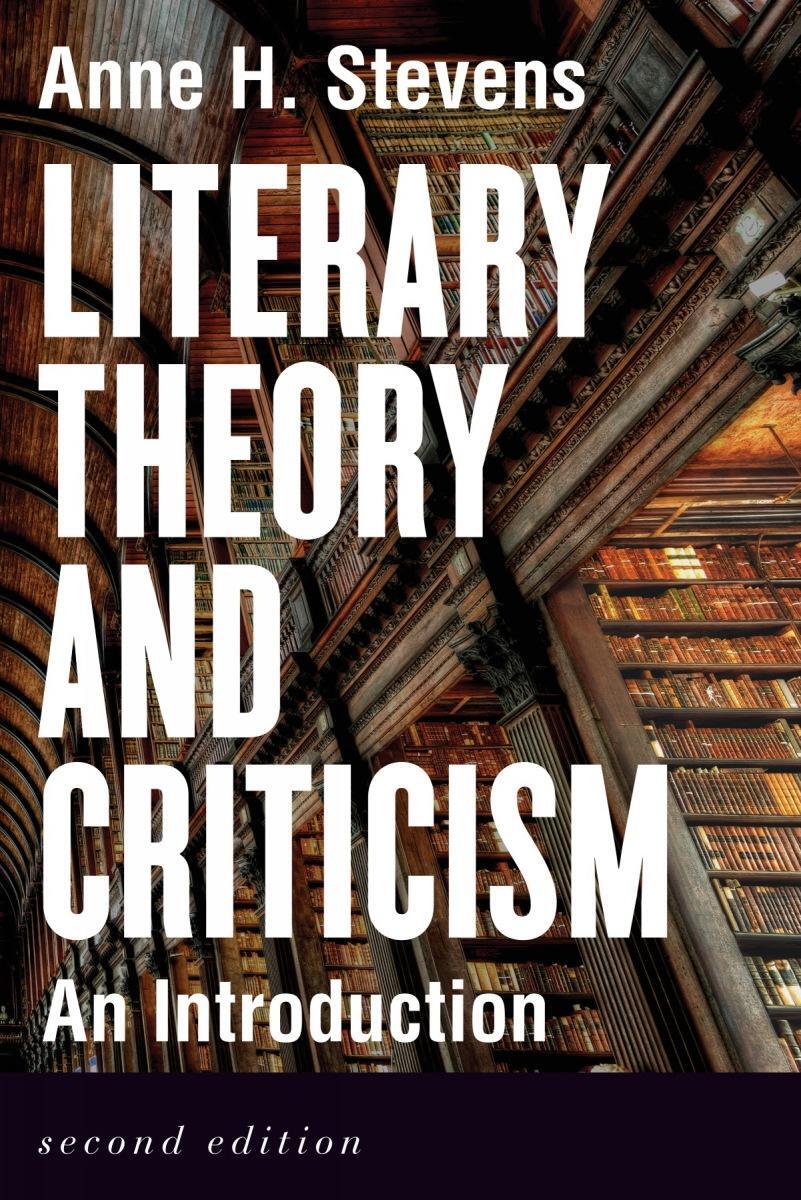
Literary Theory & Criticism: An Introduction
Literary Theory and Criticism: An Introduction provides an accessible overview of major figures and movements in literary theory and criticism from antiquity to the twenty-first century. It is designed for students at the undergraduate level or for others needing a broad synthesis of the long history of literary theory. An introductory chapter provides an overview of some of the major issues within literary theory and criticism; further chapters survey theory and criticism in antiquity, the Middle Ages and Renaissance, the Enlightenment, and the nineteenth century. For twentieth- and twenty-first-century theory, the discussion is subdivided into separate chapters on formalist, historicist, political, and psychoanalytic approaches.
The final chapter applies a variety of theoretical concepts and approaches to two famous works of literature: William Shakespeare’s Hamlet and Mary Shelley’s Frankenstein. The new edition has been updated throughout, including new or expanded coverage of Marxist theory, disability studies, affect theory, and Critical Race Theory.
Anne Stevens’s accessible introduction to literary theory has been updated to reflect recent developments in the field.
List of Tables and Illustrations
Acknowledgements
Chapter 1: Introduction Theory vs. Criticism Close Reading and Literary Studies Criticism through the Ages Literary Studies Comes to the University The “Theory” Revolution Theory and Criticism Today Literary Form Literary Characters The Importance of Context The Identity of the Author The Role of the Reader Reading as Education, Reading as Entertainment Diversity The Uses of Theory and Criticism Getting Started Chapter 2: The Ancient World Plato: The First Literary Theorist Plato’s Republic Plato’s Theory of Forms The Allegory of the Cave Speech vs. Writing Aristotle Classification Narrative Form Mimesis Rhetoric Horace’s Poetic Art Quintilian’s Figures of Speech Longinus’s Sublime Aesthetics Chapter 3: The Middle Ages and the Renaissance Religion and Biblical Interpretation Establishing a Canon Medieval Scholasticism The Four Levels of Interpretation Maimonides and the Jewish Tradition The Secularization of Interpretation Boccaccio’s Mythological Studies Humanism The Printing Press Protestantism The Growth of the Vernacular New Forms New Rules for Writing Chapter 4: The Enlightenment Print Culture Addison and Steele and the Birth of Modern Reviewing Johnson and His Dictionary The French Encyclopedia Skepticism Political Revolutions Abolitionism Early Feminism Aesthetic Innovations Idealism Kant’s Idealist Philosophy Hegel’s Ideas of History Chapter 5: The Nineteenth Century Romanticism and Nineteenth-Century Poetry Realism, Nationalism, and the Nineteenth-Century Novel Varieties of Realism Arnold, Taine, and Literary Studies Karl Marx Decadent Aesthetics Poe’s Philosophy of Composition Art for Art’s Sake Nietzsche’s Radical Philosophy Fin-de-siècle Fictions Chapter 6: Twentieth- and Twenty-First-Century Formalist Approaches The Philological Tradition Saussure and Structuralist Linguistics Russian Formalism Anglo-American Formalisms Practical and New Criticisms Neo-Aristotelianism Lévi-Strauss and Structuralist Anthropology Barthes and Structuralist Semiotics Narratology Derrida and Deconstruction Deconstruction in America Formalism Today Chapter 7: Twentieth- and Twenty-First-Century Historicist Approaches Historicist Criticism in the Eighteenth and Nineteenth Centuries Historicism to the 1970s The “New Historicism” New Approaches to History and Culture Foucault and Discourse Greenblatt and the New Historicism Bourdieu and the Sociology of Culture From Bibliography to Book History Digital Humanities Chapter 8: Twentieth- and Twenty-First-Century Political Approaches Early Marxist Theory and Criticism The Frankfurt School French Marxism British Cultural Studies Later Marxist Theory and Criticism Postcolonial and Ethnic Studies Said and Orientalism Later Postcolonial Theory Gates and the African American Tradition Critical Race Theory The Diversity of Literary Traditions Feminist Theory and Criticism Founding Figures Later Feminist Theorists Sexuality and Queer Theory Sedgwick and Butler Disability Studies Environmental Studies Chapter 9: Twentieth- and Twenty-First-Century Psychoanalytic Approaches Freud and Freudian Criticism Jungian Criticism Jacques Lacan Julia Kristeva Heirs to Lacan Phenomenology Hermeneutics Reader-Response Criticism Cognitive Approaches Affect Theory Chapter 10: From Theory to Practice The Example of Hamlet Hamlet’s Organic Unity Hamlet’s Theatricality Hamlet in Literary History Hamlet and Class Hamlet and Gender Hamlet’s Melancholy The Example of Frankenstein Frankenstein and Narratology Frankenstein and History Frankenstein and Political Approaches Frankenstein and Homosociality The Sublime, the Abject, the Uncanny Moving ForwardGlossary
Index
“The second edition of Anne H. Stevens’s Literary Theory and Criticism builds on the strength of argument and clarity of the first edition and includes some nuanced improvements. The updated text engages movements currently impacting literary interpretation, such as Black Lives Matter. Fuller attention is given to disability studies and environmental studies, and there are new sections on Critical Race Theory and affect theory. The case studies of critical schools applied to Hamlet and Frankenstein are consistently stimulating. Stevens’s compelling and readable interpretation of the history of literary theory and criticism will be instructive for both undergraduate students and general readers.” — Sandra Singer, University of Guelph